Tuesday, September 14, 2010

~ Eruptions sites stable and active ~

A few days ago I posted the aerial image below with notes. The area on it I labeled ‘Coastal flats hot zone’ is where the other photos I add today were all taken. This lavascape is hot and degassing in places, especially along the lava tube delivery lines.Above - looking northwest across the coastal flats towards the Pulama pali where the lava tubes run down the mountain to this area.
Below: The swath of destruction across the 'hot zone' and the ocean entry steam plume beyond

No surface flows are being found lately.

D/I events are beginning do the 24-hour pulsing thing again:


Both Halema’uma’u and the coastal ocean entry visitor sites have good viewing of the ongoing eruption.

I will add updates when I can, or when significant changes to the volcanic eruption take place…. Or, of course, any other exciting stuff is heading towards the islands like super ocean swells, tsunamis or hurricanes…
~ Aloha,
Leigh

Saturday, September 11, 2010

~ Lava continues pouring into the sea next to Kalapana Gardens ~


While driving down highway 130 towards Kaimu-Kalapana it is always a bit of a shock to see such a large lava generated steam plume and so close to the Kalapana Gardens subdivision homes. I took these two photos out my van window yesterday afternoon. The one below is the view from along the viewing access road on the way to the parking area:


Last night visitors to the lava viewing area did not see any surface lava but were treated to this steam plume, which also glowed orange and red from reflective lava after dark. In the evening sky above we had the planet Jupiter on the eastern horizon and in the west a bright Venus just above the setting crescent moon, which I took a picture of from there:

Tonight Venus and the crescent moon will switch positions in their placement in the western evening sky after sunset.

Wednesday, September 8, 2010

~ HVO and USGS contribute greatly to our understanding of Kilauea ~

I have appreciated all the valuable information HVO/USGS offers the public such as the aerial views, ground images, maps, graphs and other records I often refer to within my postings here. This past week they posted updated maps and images that I will share here. Click on these photos for a larger view size

Hawaii Volcano Observatory (HVO) is sponsored by the United States Geological Survey (USGS). This combination has for many decades produced a large array of data collection methods, geological & seismic studies, warning systems, public access areas, and historical records of Hawaii Island’s volcanic activity. Mauna Loa and Kilauea Volcano’s are likely the most monitored, studied and accessible of all the worlds active volcanoes. In the larger view size you can easily see the fumes from the lava tubes leading to the ocean entry, and if you look closer yet you may notice the stress fractures forming all along the new lava bench, especially near the entry point. These cracks are showing all the signs of fatigue and may be where the bench collapses in the hours or days ahead. These new lava benches are extremely dangerous to be walking on or near to.

Besides the images I post here today, the USGS/HVO has posted some new images of the Halemaumau crater with some intereseting captions on their Images webpage


Further information on these lava flow maps can be viewed on the USGS/HVO maps page


****Meanwhile, molten lava continues pouring into the ocean and the steam plume can be seen day and night from the Hawaii County lava viewing access road at the far end of highway 130 near Kalapana.
-----------------------------------------------------
Hawaii Volcano Observatory page of links

History of Hawaii Volcano Observatory (HVO)

Another valuable agency involved with our volcanoes is the National Park Service under the US Department of the Interior that among many other things offer this continuous air quality monitor and warning system webpage for the Hawaii Volcanoes National Park area.
~~~~~~~~~~~~~~~~~~~~~~~~~~~~~~~~~~~~~~~~~~~~~~~~~~~~~~~~~
CURRENT MOON

New moon today is extra close to earth

Monday, September 6, 2010

~ Ocean entry plume goes from huge to nothing Sunday ~

As seen from the Hawaii County viewing access road mid-afternoon yesterday, the ocean entry plume generated by molten lava pouring into the sea was the largest and most intense since it began flowing there on July 25th – it was even spawning those cool steam-twisters like the ones we often saw with the Waikupanaha ocean entry. Suddenly at around 6:00 PM the plume disappeared from view. By early evening only a faint reflective glow could be seen from time to time. At around the same time, reports of brighter surface lava came in from the JanGuard on-site security staff that were stationed at roads end.

The surface lava was also noted by a University Geology crew who walked out from the breakout area around 8:00 PM, which they pinpointed as being the base of the Pulama Pali a couple of miles away from the end of the lava viewing road.

At 9:30 PM yesterday (Sunday the 5th) I surveyed the coastal flats landscape from the access road and could barely locate where the ocean entry was; now just a faint fuzzy glow on the south horizon. I could not see the small surface breakouts from there. Nor could I see any visible lava glow anywhere down the lava tube system on the Pulama Pali – I was anticipating that if the ocean entry lava had all but ceased then the lava in the tube system would maybe breakout somewhere new.

Upon returning home I went on the internet websites of the USGS and Hawaiian Volcano Observatory and checked Big Island recent earthquakes, reports, D/I – Deflation/Inflation graphs and all their webcams. I was looking for anomalies that might further indicate changes within the Kilauea volcano eruptive system. Below is a collection of those findings, but essentially I found nothing out of the ordinary except the Pu`u O`o crater cam showed brighter active lava on the southern base of the crater floor, as shown in the 1st image below:

Recent Earthquakes for Hawaii as of 10:00PM Sunday:

Halema’uma’u crater cam at 10:00 PM Sunday:

This morning USGS/HVO stated on their ‘Update page’The crusted and circulating lava surface at the bottom of the deep collapse pit inset in the southeast edge of Halema`uma`u Crater was stable at about 160 m (520 ft) below the crater floor rising to 130 m (425 ft) starting at 11 pm last night and remaining there through this morning. So the webcam image below, that I captured from the crater overlook cam at 1:00AM this morning, was already showing the rising and changing surface of the pit-vent lava:

The USGS/HVO deformation - Deflation/Inflation: electronic tilt monitorsare showing a strong inflation of lava pressures that are slowing but remaining elevated today:

Final Note: This morning, from my home eighteen miles away, I could see that the ocean entry plume had returned. I have no idea if the lava will continue flowing into the sea today, or in the days ahead. Our last ocean entry in April-May only lasted one month. This July-August ocean entry has been flowing nearly seven weeks now.

A reposting below of the basics that continue to be valid:
~~~~~~~~~~~~~~~~~~~~~~~~~~~~~~~~~~~~~~~~~~~~~~~~~~~~
Both day and night views of our two drive-in volcanoes continue to put on a continuous display of eruptive activity that draws thousands of visitors from around the world every week.

Coastal lava viewingIf conditions remain stable, there will be lava sights to be seen from the viewing road even though the eruption intensity has diminished down in that area. Likely to be seen are: fuming/degassing lines down the mountainside, the slim possibility of vegetation fires or lava breakouts near or far, vast areas of shiny new lava fields with fumes wafting from them, and steam rising into the air where, after some occasional pauses, lava continues entering the ocean a mile away and will glow red-orange after dark.The county viewing area is located at the terminus of Highway 130 near Kalapana. For direct information on what is being seen from the viewing area each day you can phone the Civil Defense directed JanGuard security staff, stationed right on site, between 2:00 PM and 10:00 PM daily at (808) 430-1966 or the Lava Viewing Hotline: 961-8093

Halema’uma’u Crater
The Halema’uma’u crater has been degassing sulfur dioxide fumes by day and glowing strongly at times after dark from lava deep within the craters pit vent. (Photo courtesy of Merlin Braun) The broiling molten lava moves up and down inside this massive eruptive vent at times, in kind of a pistoning action. Great views of this impressive crater are from the Jaggar Museum balcony within the Hawaii Volcanoes National Park, depending on the weather; and the park is open to the public 24 hours a day with a nominal entrance fee by day.

Saturday, September 4, 2010

~ Biker club Kanaka Hekili visit’s lava viewing area ~ Lava flows stronger ~


Not our usual lava-viewing crowd, the Kanaka Heliki motorcycle club based on Oahu made a surprise visit to the end of Highway 130 in a rush of thundering hogs. This bunch was really a lot of fun and friendly. Coffee Jose’s Ai`open`a van offered them all kamaiina rates, which was a big hit. They even have their own website: Kanaka Hekili M/C Hawaiian Thunder

The USGS/HVO deformation - Deflation/Inflation: electronic tilt monitorsare showing a strong inflation of lava pressures right now.With the help of the Hawaiian Thunder motorcycle guys, one likely result of this increase is a strengthening of lava pouring into the sea as well as a greater possibility of surface breakouts of lava from the tube system anywhere along the miles established molten plumbing lines. There was one small breakout of lava spotted from the viewing area last night reported by security personnel but could not see it when I looked around the area at 9:30PM. What I did see were some tephra explosions erupting from the distant ocean entry, followed by a large decrease in the visible entry plume. This was possibly a collapse of a portion of the unstable lava delta/bench. Reports from today state there is a surface breakout beyond the end of the viewing area, which may be more visible tonight.

A reposting below of the basics that continue to be valid:
~~~~~~~~~~~~~~~~~~~~~~~~~~~~~~~~~~~~~~~~~~~~~~~~~~~~
Both day and night views of our two drive-in volcanoes continue to put on a continuous display of eruptive activity that draws thousands of visitors from around the world every week.

Coastal lava viewingYes there will be lava sights to be seen from the viewing road even though the eruption intensity has diminished down in that area: fuming/degassing lines down the mountainside, the slim possibility of vegetation fires or lava breakouts near or far, vast areas of shiny new lava fields with fumes wafting from them, and steam rising into the air where lava continues entering the ocean a mile away and will glow red-orange after dark.The county viewing area is located at the terminus of Highway 130 near Kalapana. For direct information on what is being seen from the viewing area each day you can phone the Civil Defense directed JanGuard security staff, stationed right on site, between 2:00 PM and 10:00 PM daily at (808) 430-1966 or the Lava Viewing Hotline: 961-8093

Halema’uma’u Crater
The Halema’uma’u crater has been degassing sulfur dioxide fumes by day and glowing strongly at times after dark from lava deep within the craters pit vent. (Photo courtesy of Merlin Braun) The broiling molten lava moves up and down inside this massive eruptive vent at times, in kind of a pistoning action. Great views of this impressive crater are from the Jaggar Museum balcony within the Hawaii Volcanoes National Park, depending on the weather; and the park is open to the public 24 hours a day with a nominal entrance fee by day.

Thursday, September 2, 2010

~ Our two drive-in volcanoes - Halema’uma’u and ocean entry eruptions - remain crowd pleasers ~

Both day and night views of our two drive-in volcanoes continue to put on a continuous display of eruptive activity that draws thousands of visitors from around the world every week.

Coastal lava viewingYes there will be lava sights to be seen from the viewing road even though the eruption intensity has diminished down in that area: fuming/degassing lines down the mountainside, the slim possibility of vegetation fires or lava breakouts near or far, vast areas of shiny new lava fields with fumes wafting from them, and steam rising into the air where lava continues entering the ocean a mile away and will glow red-orange after dark.The county viewing area is located at the terminus of Highway 130 near Kalapana. For direct information on what is being seen from the viewing area each day you can phone the JanGuard security staff, stationed right on site, between 2:00 PM and 10:00 PM daily at (808) 430-1966 or the Lava Viewing Hotline: 961-8093

Halema’uma’u Crater
The Halema’uma’u crater has been degassing sulfur dioxide fumes by day and glowing strongly at times after dark from lava deep within the craters pit vent. (Photo courtesy of Merlin Braun) The broiling molten lava moves up and down inside this massive eruptive vent at times, in kind of a pistoning action. Great views of this impressive crater are from the Jaggar Museum balcony within the Hawaii Volcanoes National Park, depending on the weather; and the park is open to the public 24 hours a day with a nominal entrance fee by day.

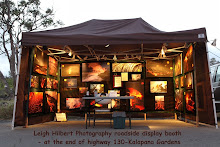
****For those that would like say hi and see some of my large canvas prints of lava, I will be setting up my display booth today/tonight (Thursday Sept. 2nd) and possibly the next day as well. I set up in the ‘vendors’ area next to the lava viewing parking stalls at the end of highway 130, Kalapana Gardens vicinity.

Tuesday, August 31, 2010

~ Pele’s Heartbeat? ~

Pele's monitor at 11:00 AM this morning.
The USGS/HVO deformation - Deflation/Inflation: electronic tilt monitors are recording a pulse-like graph this week, similar to a heart monitor — Makes me wonder if Pele is in a stable and restful mode right now; taking a break from further expansion after an intense couple of months.

Ocean entry at 6:00 AM yesterday

This stable action continues manifesting on the coastal flats in the form of no surface breakouts and a steady flow of lava out off the edges of the deltas created between July 25th and today.

There are a few smaller ocean entry dribbles west of the main entry point about 1200-feet away, but most of the lava on the new benches flows into the sea across one central section directly south-southeast of the tube system providing it, which is this fuming area below:

Eastern edge of the main ocean entry early yesterday morning

~~~~~~~~~~~~~~~~~~~~~~~~~~~~~~~~~~~~~~~~~~~~~~~~~~~~~~~~~~~~~~~~~~~~~
Coastal lava viewing
Yes there will be lava sights to be seen from the viewing road even though the eruption intensity has diminished down in that area: fuming/degassing lines down the mountainside, the slim possibility of vegetation fires or lava breakouts near or far, vast areas of shiny new lava fields with fumes wafting from them, and steam rising into the air where lava continues entering the ocean a mile away and will glow red-orange after dark.
The county viewing area is located at the terminus of Highway 130 near Kalapana. For direct information on what is being seen from the viewing area each day you can phone the JanGuard security staff, stationed right on site, between 2:00 PM and 10:00 PM daily at (808) 430-1966 or the Lava Viewing Hotline: 961-8093

Halema’uma’u Crater
The Halema’uma’u crater has been degassing sulfur dioxide fumes by day and glowing strongly at times after dark from lava deep within the craters pit vent. The broiling molten lava moves up and down inside this massive eruptive vent at times, in kind of a pistoning action. Great views of this impressive crater are from the Jaggar Museum balcony within the Hawaii Volcanoes National Park, depending on the weather; and the park is open to the public 24 hours a day with a nominal entrance fee by day.