Thursday, June 17, 2010

Molten lava advances further into view high on the pali

Above: last night’s sunset and a swelling crescent moon as viewed from the lower Puna area. The planet Venus was also showing brightly below and to the right of the moon after dark.(Click on the image to open a larger view window)

Surface lava has continued its slow advance into view as seen from the coast along highway 130. Lava was visible near the top of what was once the Royal Gardens subdivision, (long since lava-destroyed except for one fragment and residence). In the distance, trees along the upper region of this area could occasionally be seen bursting into flames as lava encroached; most noticeably after dark.

Will this lava continue on down the pali to the coastal flats? No one knows, but so far the advance continues. This lava is being fed by lava tubes from the TEB eruption site far above the edge of the pali where the lava is resurfacing as A`a and pahoehoe breakouts.

This advance of lava may be slowed by a recent drop in magma pressures, as are being recorded by the USGS/HVO tilt monitors right now. In the past any pronounced drop in pressure has often resulted soon after by a drop in surface flow activity.

There are no active lava breakouts on coastal flats and no ocean entry lava at this time.

I will update these blog postings next when there are some significant changes or newsworthy reports to offer you :)

Otherwise there has been little change and I will leave portions of my previous posting from the 14th below, which contains more details about this weeks viewing:

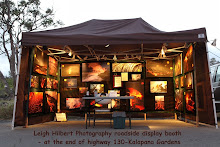
At 7:50 PM last night (June 13th) I took the photo above from in front of my lava photo display booth on Highway 130 at the Hawaii County viewing area parking lot in Kalapana Gardens with a 200mm lens.

The lava glow in the picture is from several sources: Pu`u O`o crater lava pond (on upper left) reflecting into the low clouds; surface lava flows breaking away from the Kupaianaha eruption site, which is beginning to show itself across the very top edge of the pali in two locations: directly above & near the lava covered Royal Gardens subdivision area, and thirdly, just out of range to the right of this photo is a new, visibly small, emergence of surface lava beginning to show above & east of there near the zone that the April-May Quarry lava flow first showed itself in late March of this year. The surface lava can be seen more clearly further along the highway walk towards the ‘viewing area’ at roads end, especially with binoculars or long camera lenses.

Active lava viewing prospects for the public:
1) The Halema’uma’u crater has been degassing sulfur dioxide fumes by day and glowing strongly at times after dark from lava deep within the craters pit vent. Great views are from the Jaggar Museum balcony within the Hawaii Volcanoes National Park, depending on the weather; the park is open to the public 24 hours a day.

2) Coastal viewing: A one mile walk to the very end of highway 130; this is the same location where lava came onto the highway there on May 5th, 2010 but the lava there has now cooled, though is still hot a short distance away. The lava fuming/degassing can be seen coming down the distant pali during the day. After dark lava glow can possibly be seen in two or three places high atop the mountain slopes.

Official viewing hours are from 2:00 PM until around 9:30 PM - everyday, with last car allowed in at 8:00 PM. On site are security personnel, a few port-o-potties at both the parking lot and at the end of the road, vendors occasionally have drinking water but it is best to bring some with you and also some decent walking shoes. The road is open to all traffic on all other hours.

Monday, June 14, 2010

More lava glow being seen high on the pali ~ No significant overall change otherwise

At 7:50 PM last night I took the photo above from in front of my lava photo display booth on Highway 130 at the Hawaii County viewing area parking lot in Kalapana Gardens with a 200mm lens.

The lava glow in the picture is from several sources: Pu`u O`o crater lava pond (on upper left) reflecting into the low clouds; surface lava flows breaking away from the Kupaianaha eruption site, which is beginning to show itself across the very top edge of the pali in two locations: directly above & near the lava covered Royal Gardens subdivision area, and thirdly, just out of range to the right of this photo is a new, visibly small, emergence of surface lava beginning to show above & east of there near the zone that the April-May Quarry lava flow first showed itself in late March of this year. The surface lava can be seen more clearly further along the highway walk towards the ‘viewing area’ at roads end, especially with binoculars or long camera lenses.

I will update these blog postings next when there are some significant changes or newsworthy reports to offer you :)

Active lava viewing prospects for the public:
1) The Halema’uma’u crater has been degassing sulfur dioxide fumes by day and glowing strongly at times after dark from lava deep within the craters pit vent. Great views are from the Jaggar Museum balcony within the Hawaii Volcanoes National Park, depending on the weather; the park is open to the public 24 hours a day.

2) Coastal viewing: A one mile walk to the very end of highway 130; this is the same location where lava came onto the highway there on May 5th, 2010 but the lava there has now cooled, though is still hot a short distance away. The lava fuming/degassing can be seen coming down the distant pali during the day. After dark lava glow can possibly be seen in two or three places high atop the mountain slopes.
Official viewing hours are from 2:00 PM until around 9:30 PM, with last car allowed in at 8:00 PM. On site are security personnel, a few port-o-potties at both the parking lot and at the end of the road, vendors occasionally have drinking water but it is best to bring some with you and also some decent walking shoes. The road is open to all traffic on all other hours.

I will leave portions of my previous post below here as they still contains some valid information:
----------------------------------------------------------------------------------------------
No active lava breakouts on coastal flats ~ Bright glowing lava orbs high on the pali

The small and scattered surface breakouts near the end of Highway 130 and down near the coast nearby have continued to stall and become simply hot-spots. The hot spots can only be seen easily after dark and even then, only if within fifty feet; one such hot-spot is only 150 feet west from the viewing area at the terminus of the highway, but can not be seen from there.

Over the past few days, by looking up west-northwest from the end of Highway 130 after dark, an ever growing line of orange-red lava can be seen slowing advancing over the very top edge of the mountain slopes above the Pulama pali and below the TEB eruption site. It looks possible that this advancing surface lava may begin a decent down the pali in the days ahead; perhaps bringing yet another surface lava flow to the coastal flats. It is too early to know if that is the case though.

Also viewed from along the end of 130 after dark, when low clouds are present, we have been seeing a broad reddish-orange glow above the distant Pu`u O`o crater, which according to USGS/HVO updates , has a lava lake ponding on the crater’s floor. The glow we see is this ponding lava reflecting up into the low clouds above it.

Meanwhile, the Halema’uma’u crater’s hot vent has been giving nighttime viewers a good show most nights as seen from the Jaggar Museum’s balcony. USGS reports that the broiling lava down inside the vent has been occasionally reaching ever-higher levels then receding back down the massive vertical tube.

In case you have not seen the movie trailer for my new feature length (76 minutes) lava flow movie, you can watch it below:

All video and stills used for the movie were recorded between April 14th and May 22nd, 2010 of a surface flow of lava moving down the Pulama Pali on the south slopes of Kilauea Volcano on the Island of Hawaii, eventually entering the ocean.

On the way towards the ocean the sprawling surface flow travels through two Hawaii County viewing areas, two forests and pours into the sea – all in spectacular fashion. The movie contains limited commentary and has original music and theme song, as well as four classic Hawaiian chants, which all honor the Volcano Goddess Pele.

Below is the 6 1/2 minute trailer for my movie as posted on YouTube - It is cropped for YouTube so some of the actual movie image & text will be partially cut off for this trailer: {To see this view box better I also have it placed at the bottom of this page or double-click it and watch it on YouTube}
Shot in full HD wide-screen but reduced to HD for the DVD, I have DVD’s ready to mail out now, to order a copy of the movie please email me at
leigh.hi1@hawaiiantel.net -- It costs $30 locally and add $4 if you want one sent to the mainland – and worth every penny! (Check or credit card)
(And also... you may have noticed I don't have any outside advertising on this site at all-- so you would help me keep that tradition going by purchasing my lava DVD, and Mahalo Nui to those that already have!!! ;)

Friday, June 11, 2010

No active lava breakouts on coastal flats ~ Bright glowing lava orbs high on the pali

The small and scattered surface breakouts near the end of Highway 130 and down near the coast nearby have continued to stall and become simply hot-spots. The hot-spots can only be seen easily after dark and even then, only if within fifty feet; one such hot-spot is only 150 feet from the viewing area at the terminus of the highway, but can not be seen from there.

Over the past few days, by looking up northwest from the end of Highway 130 after dark, an ever growing line of orange-red lava can be seen slowing advancing over the very top edge of the mountain slopes above the Pulama pali and below the TEB eruption site. It looks possible that this advancing surface lava may begin a decent down the pali in the days ahead; perhaps bringing yet another surface lava flow to the coastal flats. It is too early to know if that is the case though.

Also viewed from along the end of 130 after dark, when low clouds are present, we have been seeing a broad reddish-orange glow above the distant Pu`u O`o crater, which according to USGS/HVO updates , has a lava lake ponding on the crater’s floor. The glow we see is this ponding lava reflecting up into the low clouds above it.

Meanwhile, the Halema’uma’u crater’s hot vent has been giving nighttime viewers a good show most nights as seen from the Jaggar Museum’s balcony. USGS reports that the broiling lava down inside the vent has been occasionally reaching ever-higher levels then receding back down the massive vertical tube.
------------------------------------------

Active lava viewing prospects for the public:
1) The Halema’uma’u crater has been degassing sulfur dioxide fumes by day and glowing strongly at times after dark from lava deep within the craters pit vent. Great views are from the Jaggar Museum balcony within the Hawaii Volcanoes National Park, depending on the weather; the park is open to the public 24 hours a day.

2) Coastal viewing: A one mile walk to the very end of highway 130 to possibly see a new surface flow of lava; this is the same location where lava came onto the highway there on May 5th, 2010. The lava fuming/degassing can be seen coming down the distant pali during the day. After dark lava glow can possibly be seen in two or three places high atop the mountain slopes.
Official viewing hours are from 2:00 PM until around 9:30 PM, with last car allowed in at 8:00 PM. The road is open to all traffic on all other hours.
------------------------------------------------------------------------

In case you have not seen the movie trailer for my new feature length (84 minutes) lava flow movie, you can watch it below:

All video and stills used for the movie were recorded between April 14th and May 22nd, 2010 of a surface flow of lava moving down the Pulama Pali on the south slopes of Kilauea Volcano on the Island of Hawaii, eventually entering the ocean.

On the way towards the ocean the sprawling surface flow travels through two Hawaii County viewing areas, two forests and pours into the sea – all in spectacular fashion. The movie contains limited commentary and has original music and theme song, as well as four classic Hawaiian chants, which all honor the Volcano Goddess Pele.

Below is the 6 1/2 minute trailer for my movie as posted on YouTube - It is cropped for YouTube so some of the actual movie image & text will be partially cut off for this trailer: {To see this view box better I also have it placed at the bottom of this page or double-click it and watch it on YouTube}

Shot in full HD wide-screen, I have DVD’s ready to mail out now, to order a copy of the movie please email me at:
leigh.hi1@hawaiiantel.net -- It costs $20 locally and add $4 if you want one sent to the mainland – and worth every penny! :)
(And also... you may have noticed I don't have any outside advertising on this site at all-- so you would help me keep that tradition going by purchasing my lava DVD, and Mahalo Nui to those that already have!!! ;)

Wednesday, June 9, 2010

Surface lava breaking out again very near the end of Highway 130

Photo by Ron Boyle

Pahoehoe has re-emerged on the surface within a 100-feet of the lava-covered terminus of Highway 130 and the Hawaii County end-of-the-road viewing area; as of 11:00 PM last night. This slow moving lava breakout may reach the highway by tonight unless it stalls, as it often does. But it should provide some viewing for the visitors that do come out to see lava during the official opening hours from 2:00 Pm to 9:30 PM daily.

Unfortunately, visitors are still having to park a mile away and walk in to the end of the road. After dark, his hike does provide a view of the new lava we are also seeing high atop the Pulama Pali.

Active lava viewing prospects for the public:
1) The Halema’uma’u crater has been degassing sulfur dioxide fumes by day and glowing strongly at times after dark from lava deep within the craters pit vent. Great views are from the Jaggar Museum balcony within the Hawaii Volcanoes National Park, depending on the weather; the park is open to the public 24 hours a day.

2) Coastal viewing: A walk to the very end of highway 130 to possibly see a new surface flow of lava; this is the same location where lava came onto the highway there on May 5th, 2010. The lava fuming/degassing can be seen coming down the distant pali during the day. After dark lava glow can possibly be seen high atop the mountain slopes.
Official viewing hours are from 2:00 PM until around 9:30 PM, with last car allowed in at 8:00 PM. The road is open to all traffic on all other hours.

Below are snippets of my previous recent postings:
-------------------------------------------------------------------------------------

Molten lava breakouts continue at four locations across the coastal flats west and southwest from the lava-covered end of Highway 130. None of these are making it into the ocean but two have come close this week. Some of these breakouts are pictured in my previous post below.

Activity up on the mountain above is a different story. Not only is there more lava breaking out near the TEB eruption site 1 ½ miles east from Pu`u O`o, but all this past week the Pu`u O`o crater vent has been forming a an open pond of molten lava. The Halema’uma’u pit vent inside the crater has also been more active with its broiling lava pond.

The USGS posted an informative and detailed account on June 3rd of both of the crater’s lava ponding, as well as a pretty cool thermal video of the Halema’uma’u ponding .

Below is my previous post announcing my movie about the April May 2010 surface flow of lava and below that, my posting of coastal flats lava activity continues to reflect current conditions:
-----------------------------------------------------------------
My new feature length (84 minutes) lava flow movie is done!

All video and stills used for the movie were recorded between April 14th and May 22nd, 2010 of a surface flow of lava moving down the Pulama Pali on the south slopes of Kilauea Volcano on the Island of Hawaii, eventually entering the ocean.

In the movie we follow the leading front of molten lava as it travels through two Hawaii County viewing areas, two forests and pouring into the sea. It contains limited commentary and has original music and theme song, as well as four classic Hawaiian Pele chants.

Below is the 6 1/2 minute trailer for my movie as posted on YouTube - It is cropped for YouTube so some of the actual movie image & text will be partially cut off for this trailer: {To see this view box better I also have it placed at the bottom of this page or double-click it and watch it on YouTube}

The movie is available through me on DVD. Shot in full HD wide-screen
To order a DVD of the movie please email me at
leigh.hi1@hawaiiantel.net
--------------------------------------------------
--------------------------------------------------


The photos below contributed by Ron Boyle were taken this week along some burned out kipuka forest.


Tuesday, June 8, 2010

Small scattered surface on coastal flats ~ Molten lava ponds in both Kilauea craters

Photos from the USGS website page linked below.

Thermal image of the Halema’uma’u pit vent

Molten lava breakouts continue at four locations across the coastal flats west and southwest from the lava-covered end of Highway 130. None of these are making it into the ocean but two have come close this week. Some of these breakouts are pictured in my previous post below.

Activity up on the mountain above is a different story. Not only is there more lava breaking out near the TEB eruption site 1 ½ miles east from Pu`u O`o, but all this past week the Pu`u O`o crater vent has been forming a an open pond of molten lava. The Halema’uma’u pit vent inside the crater has also been more active with its broiling lava pond.

The USGS posted an informative and detailed account on June 3rd of both of the crater’s lava ponding, as well as a pretty cool thermal video of the Halema’uma’u ponding .

Below is my previous post announcing my movie about the April May 2010 surface flow of lava and below that, my posting of coastal flats lava activity that continues to reflect current conditions:
-----------------------------------------------------------------
My new feature length (84 minutes) lava flow movie is done!

All video and stills used for the movie were recorded between April 14th and May 22nd, 2010 of a surface flow of lava moving down the Pulama Pali on the south slopes of Kilauea Volcano on the Island of Hawaii, eventually entering the ocean.

In the movie we follow the leading front of molten lava as it travels through two Hawaii County viewing areas, two forests and pouring into the sea. It contains limited commentary and has original music and theme song, as well as four classic Hawaiian Pele chants.

Below is the 6 1/2 minute trailer for my movie as posted on YouTube - It is cropped for YouTube so some of the actual movie image & text will be partially cut off for this trailer: {To see this view box better I also have it placed at the bottom of this page or double-click it and watch it on YouTube}

The movie is available through me on DVD. Shot in full HD wide-screen
To order a DVD of the movie please email me at
leigh.hi1@hawaiiantel.net
--------------------------------------------------
--------------------------------------------------

Below is my previous blog post and it still is accurate as of today:

Three areas on the coastal flats off the end of highway 130 are hosting molten lava breakouts; one of which is looking like it may make it to the sea in the next 24 hours and restart the ocean entry. Another is in the old quarry vicinity, and yet another further out to the southwest. The whole lower coastal flats April-May lava fields are heating up again and fuming in areas that had cooled down previously.

The photos below contributed by Ron Boyle were taken early this morning along some burned out kipuka forest.


Active lava viewing prospects for the public:
1) The Halema’uma’u crater has been degassing sulfur dioxide fumes by day and glowing strongly at times after dark from lava deep within the craters pit vent. Great views are from the Jaggar Museum balcony within the Hawaii Volcanoes National Park, depending on the weather; the park is open to the public 24 hours a day.

2) Coastal viewing: Very limited to views from highway 130 near Kalapana Gardens homes, or a walk to the very end of highway 130 to see where the lava came onto the highway there on May 5th, 2010. The lava fuming/degassing can be seen coming down the distant pali during the day. After dark lava glow and some brush burning glow can possibly be seen.
Official viewing hours are from 2:00 PM until around 9:30 PM, with last car allowed in at 8:00 PM. The road is open to all traffic on all other hours.

Sunday, June 6, 2010

New lava flow movie is done - Trailer here

My new feature length (76 minutes) lava flow movie is done!

All video and stills used for the movie were recorded between April 14th and May 22nd, 2010 of a surface flow of lava moving down the Pulama Pali on the south slopes of Kilauea Volcano on the Island of Hawaii, eventually entering the ocean.

In the movie we follow the leading front of molten lava as it travels through two Hawaii County viewing areas, two forests and pouring into the sea. It contains limited commentary and has original music and theme song, as well as four classic Hawaiian Pele chants.

Below is the 6 1/2 minute trailer for my movie as posted on YouTube - It is cropped for YouTube so some of the actual movie image & text will be partially cut off for this trailer: {To see this view box better I also have it placed at the bottom of this page or double-click it and watch it on YouTube} The movie is available through me on DVD. Shot in full HD widescreen but reduced to HD for DVD. To order a signed DVD of the movie please email me at: leigh.hi1@hawaiiantel.net
Cost is $30 each; plus shipping and handling of $4 in the US. Payment by either check or credit card.
--------------------------------------------------
--------------------------------------------------

Below is my previous blog post and it still is accurate as of today:

Three areas on the coastal flats off the end of highway 130 are hosting molten lava breakouts; one of which is looking like it may make it to the sea in the next 24 hours and restart the ocean entry. Another is in the old quarry vicinity, and yet another further out to the southwest. The whole lower coastal flats April-May lava fields are heating up again and fuming in areas that had cooled down previously.

The photos below contributed by Ron Boyle were taken early this morning along some burned out kipuka forest.


Active lava viewing prospects for the public:
1) The Halema’uma’u crater has been degassing sulfur dioxide fumes by day and glowing strongly at times after dark from lava deep within the craters pit vent. Great views are from the Jaggar Museum balcony within the Hawaii Volcanoes National Park, depending on the weather; the park is open to the public 24 hours a day.

2) Coastal viewing: Very limited to views from highway 130 near Kalapana Gardens homes, or a walk to the very end of highway 130 to see where the lava came onto the highway there on May 5th, 2010. The lava fuming/degassing can be seen coming down the distant pali during the day. After dark lava glow and some brush burning glow can possibly be seen.
Official viewing hours are from 2:00 PM until around 9:30 PM, with last car allowed in at 8:00 PM. The road is open to all traffic on all other hours.

Friday, June 4, 2010

Scattered surface flows on the lower coastal flats – No ocean entry lava

Three areas on the coastal flats off the end of highway 130 are hosting molten lava breakouts; one of which is looking like it may make it to the sea in the next 24 hours and restart the ocean entry. Another is in the old quarry vicinity, and yet another further out to the southwest. The whole lower coastal flats April-May lava fields are heating up again and fuming in areas that had cooled down previously.

The photos below contributed by Ron Boyle were taken early this morning along some burned out kipuka forest.


Active lava viewing prospects for the public:
1) The Halema’uma’u crater has been degassing sulfur dioxide fumes by day and glowing strongly at times after dark from lava deep within the craters pit vent. Great views are from the Jaggar Museum balcony within the Hawaii Volcanoes National Park, depending on the weather; the park is open to the public 24 hours a day.

2) Coastal viewing: Very limited to views from highway 130 near Kalapana Gardens homes, or a walk to the very end of highway 130 to see where the lava came onto the highway there on May 5th, 2010. The lava fuming/degassing can be seen coming down the distant pali during the day. After dark lava glow and some brush burning glow can possibly be seen.
Official viewing hours are from 2:00 PM until around 9:30 PM, with last car allowed in at 8:00 PM. The road is open to all traffic on all other hours.